Weekly Brief / Issue 03
China Capital Markets Weekly: Robotics Meets the Commercialization Test
Deep Robotics' inquiry response connects fast sales growth with margins, customer demand and the cost of its next phase
5 min read
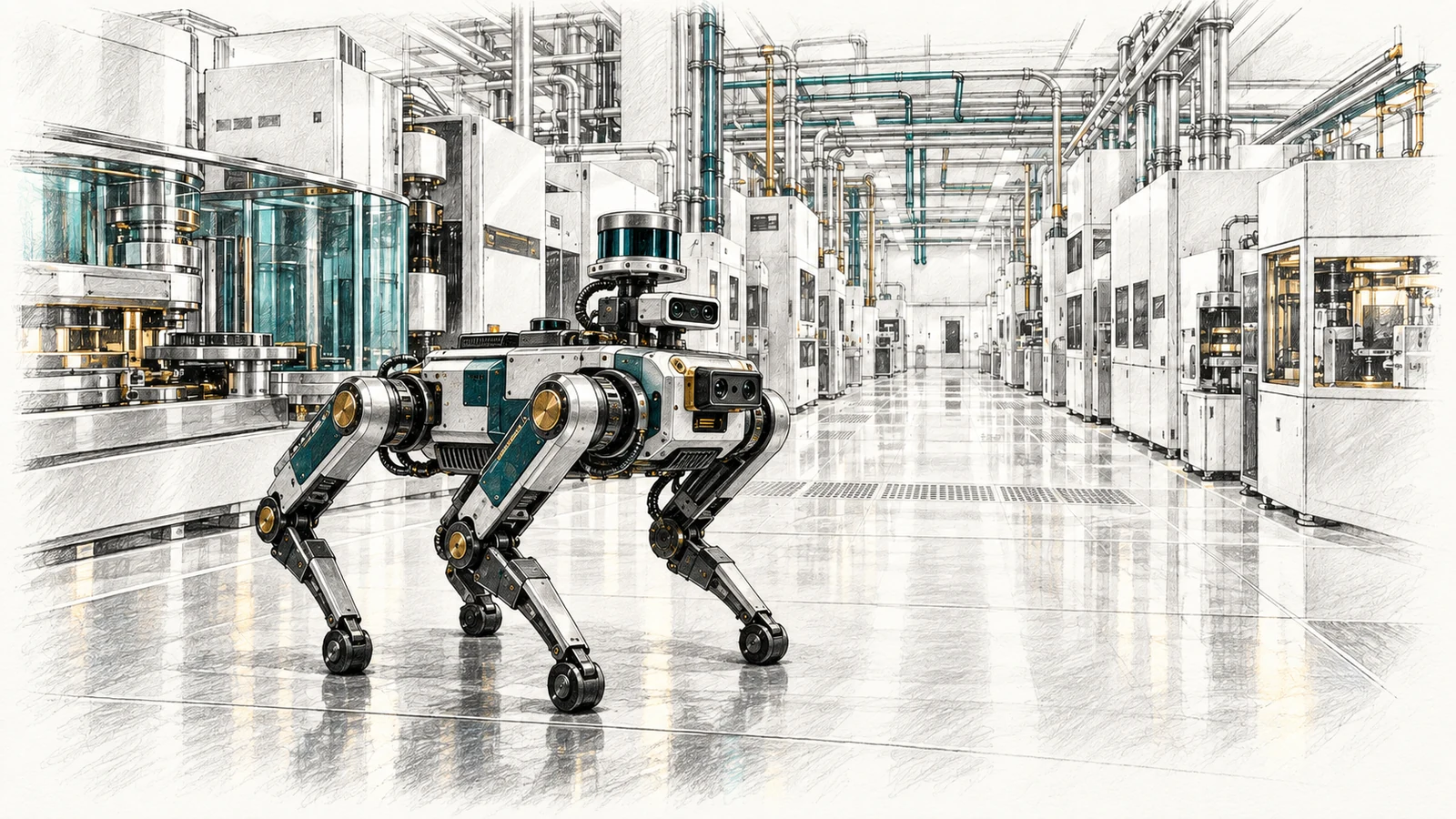
Deep Robotics more than tripled revenue in 2025 and reported a higher gross margin. Its proposed CNY2.5 billion fundraising plan is a much larger bet on what comes next. The inquiry response helps readers distinguish commercial progress from the assumptions required to finance expansion.
Contents
A robotics story becomes an operating business
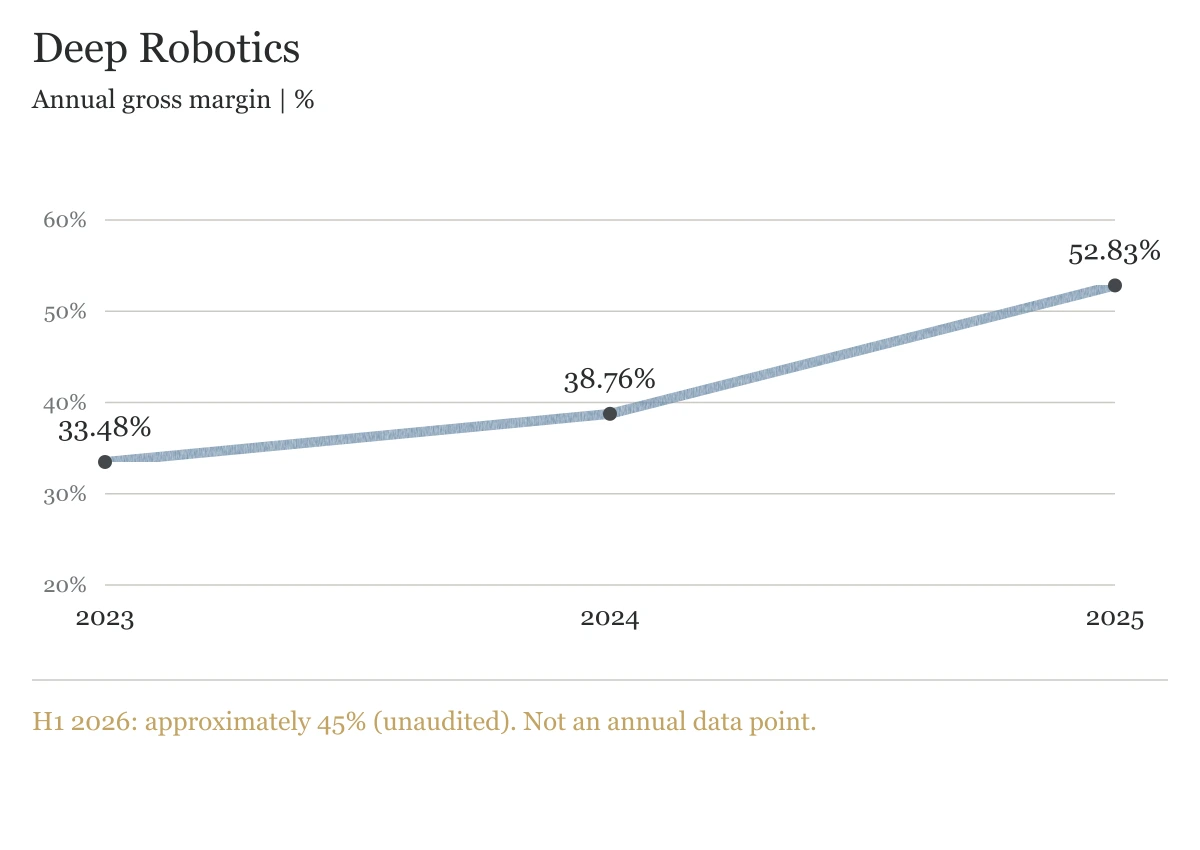
Deep Robotics' August 7 inquiry response offers more than a description of sophisticated machines. Revenue rose from approximately CNY50 million in 2023 to CNY103 million in 2024 and CNY337 million in 2025. Gross margin increased from 33.48% to 52.83% over the same period. Adjusted profit moved from a loss to roughly CNY15 million in 2025.
Those figures show commercial progress. The company's proposed CNY2.5 billion fundraising plan asks investors to consider something else: the cost and uncertainty of building a much larger business. The gap between an established product sale and a funded expansion plan runs through the week's IPO review.
What the response adds to the technology narrative
The 411-page first-round response addresses fifteen groups of questions. Its subjects connect algorithms and models, robot hardware, commercialization, profitability and the proposed use of proceeds. That breadth reflects the difficulty of evaluating a robotics company through demonstrations alone.
A machine can perform successfully in a trial without generating a repeatable sale. A commercial deployment adds requirements: customer acceptance, reliability in an operating environment, maintenance, training and a price that covers support as well as manufacture. Sales growth needs to be understood in that setting.
| Deep Robotics, rounded where applicable | 2023 | 2024 | 2025 |
|---|---|---|---|
| Revenue, CNY million | 50 | 103 | 337 |
| Adjusted profit, CNY million | -29 | -24 | 15 |
| Gross margin | 33.48% | 38.76% | 52.83% |
Source: first-round inquiry response, business and profitability sections.
The margin increase deserves attention because it affects how quickly sales can support research and administration. A shift toward higher-value products, a different customer mix or improved production efficiency could all help. They do not have the same durability. The response should be read for the contribution of each factor rather than treating the combined margin as a permanent characteristic of the business.
The disclosed first-half 2026 gross margin of approximately 45% is unaudited and covers a different period. It is below the 2025 annual level, but neither figure should be substituted for the other in a long-term forecast. Product mix, delivery timing and the costs of new deployments can change a half-year result.
The funding plan is not an order book
Deep Robotics reported approximately CNY235 million in orders at the end of May. Its CNY2.5 billion fundraising plan is more than ten times that amount, but comparing the two is not a valuation test. One is a balance of orders at a particular date; the other finances facilities, research and industrialization over a longer horizon.
The comparison is useful because it shows how much future activity the plan must accommodate. Investors need to know which projects serve existing demand, which create new production capability and which fund products still in development. The time between spending the money and generating revenue will differ across those uses.
Working capital adds another layer. A larger production program can require inventory and supplier payments before customer collection. Even an applicant that reaches accounting profitability may still need cash to support growth. Capacity, revenue, gross margin and collection assumptions should therefore be consistent with one another.
Nothing in those questions discounts the company's technical achievements. They explain what has to accompany the technology if the business is to sustain itself commercially.
Other projects move toward registration
Yulong Technology passed its ChiNext committee review on August 6 and submitted registration materials on August 7. Liqin also reached registration submission on August 7. On the Beijing exchange, Senfeng passed its review while ASD's review was deferred. Yuanda moved to registration submission, and registration results appeared for Baimai, Jintai, Huada Haitian and Xinsheng.
These stages have different meanings. A committee pass addresses the application at the exchange-review stage. Submission sends it into the registration process. A deferral leaves matters for further examination; it is not the same as a rejection. A registration result still precedes the work of an actual offering.
Deep Robotics' detailed reply is more informative than a project-status label. It lets readers examine what customers bought, how margins changed and what the proposed expansion would cost. Those operating facts provide a firmer basis for judging an applicant than the speed at which its application moves between stages.
Trading supervision continues alongside issuer review
The Shenzhen exchange's August 3–7 bulletin reported measures concerning 100 abnormal trading incidents and six checks connected with major company matters. Its discipline and regulatory-letter figures used a different, overlapping publication window. They should not be added together as a single count of penalties imposed during these seven days.
The distinction is useful for readers. An abnormal-trading measure concerns trading conduct. An issuer inquiry seeks explanations about an application or disclosure. A disciplinary decision has its own findings and consequences. None can be used as a shortcut to characterize every company appearing in the same week's regulatory record.
For robotics applicants, the most informative next disclosures will be commercial ones: how deployments become accepted sales, whether the margin survives a changing product mix, and how much cash is required before the next order pays. Those are measurable questions behind an otherwise compelling technology story.
Sources
- Deep Robotics first-round inquiry response, August 7
- Yulong Technology committee result
- Shenzhen regulatory bulletin, August 3–7
- Shanghai project filings, Shenzhen project filings, Beijing project filings
Disclaimer
This article examines public records relating to the reporting period. It is for research and educational purposes and is not investment, legal or accounting advice, or a recommendation concerning any security. Official findings are attributed to the relevant authority; analytical observations are not findings of misconduct. Public documents may subsequently be corrected or supplemented.
Continue reading
View all records
Weekly Brief · 28 September to 4 October 2026
China Capital Markets Weekly: A Medical Approval Is Not Yet a Revenue Stream
Neuracle's brain-computer interface filing separates clinical progress from commercial revenue as semiconductor replies test the assumptions behind growth
Disclosure EvidenceCash Flow QualityRegulatory Scope & Timing

Weekly Brief · 21 to 27 September 2026
China Capital Markets Weekly: Airline Growth Meets the Balance Sheet
Loong Airlines' reply brings fleet financing into view, while review decisions and Beijing measures put the week's milestones in context