Neuracle's brain-computer interface filing separates clinical progress from commercial revenue as semiconductor replies test the assumptions behind growth
Neuracle's invasive brain-computer interface product received medical-device registration in March, but had not generated revenue during the reporting period covered by its prospectus. Its September 29 reply explains the technology alongside losses, R&D and customer accounts. Semiconductor applicants face questions about adoption and profitability, Shenzhen and Beijing listings reach the market, and regional measures address construction advances, board composition and advisory content.
Why the AI chipmaker's shrinking finished-goods balance and growing raw-material write-down deserve to be read together.
The 2026 interim report, p.109, records a CNY396.5 million first-half net raw-material charge and a negative CNY2.9 million finished-goods charge. Finished-goods provision coverage nevertheless rises to 67.63% as gross cost shrinks, while raw materials and outsourced processing hold 93.32% of net inventory.
In Cambricon's 2026 interim report, the most striking inventory ratio and the largest new write-down belong to different categories. Following that distinction reveals the cost of buying ahead, the limits of an order snapshot, and the financial commitment still waiting to become a customer sale.
Separating lower 2025 R&D investment from a larger amount carried forward as an asset.
The 2025 annual report, pp.195–196, shows CNY218.8 million of new capitalized R&D and CNY157.3 million transferred to intangible assets, not current profit or loss. Development expenditure reached CNY259.5 million in the 2026 interim report, p.153.
Visionox's 2025 R&D expense decline combines lower total investment with higher capitalization. Project movement tables track the cost into intangible assets and an expanding development balance, while the 2026 figures and a new consolidation boundary qualify the interpretation.
Loong Airlines' reply brings fleet financing into view, while review decisions and Beijing measures put the week's milestones in context
An airline can grow its fleet without owning every aircraft, but the lease payments still have to be funded. Loong Airlines' first-round response examines that distinction alongside maintenance costs, payables and liquidity. Langgao advances to registration submission, three applications end, and Beijing's regulatory measures address fund disclosure and the outsourcing of advisory communications.
Following a liability increase from its non-cash recognition to subsequent cash settlement.
The 2025 annual report, p.180, shows CNY504.1 million of non-cash increases within a CNY568.7 million rise in long-term payables, including current portions. The 2026 interim report, p.140, then records CNY430.0 million of cash reductions and a CNY391.5 million balance decline.
East's 2025 financing-liability reconciliation records CNY504.1 million of non-cash additions to long-term payables. Cash-receipt, carrying-value, and contractual-payment bridges identify the missing transaction-level explanation, while substantial first-half 2026 settlement counters a simple debt-accumulation thesis.
Chip-equipment and semiconductor replies connect technical claims with losses, assets and the economics of expansion
Huazhuo Jingke's precision-equipment story and Changjing's move toward a Fabless-plus-IDM model face different financial tests. Their replies address the evidence behind technology, revenue and asset values. A whistleblower reward notice and Shenzhen measures also put responsibility for public information in focus.
How an estimate for products still under warranty connects past sales, future service costs, and reported margins.
The 2025 annual report, p.193, carries CNY5.569 billion of assurance-warranty provisions based on remaining warranty months and an average service rate. The 2024 report, p.161, separately moves CNY2.295 billion of 2023 warranty expense from selling costs to cost of sales.
Sungrow estimates warranty obligations from products still covered, remaining months, and an average service rate. The closing balance, an expense reclassification, retention assets, and strong cash resources explain why investors need a cohort and movement bridge before judging product economics or future service costs.
The price-floor clause behind a long-dated obligation to purchase a seller's remaining interest.
The 2025 annual report, p.283, records CNY415.5 million for a future purchase of Gorka's then-held DiaSys interest. The 2026 interim bridge, p.216, shows its CNY23.6 million decrease was entirely non-cash, not repayment.
A price-floor clause disclosed in the original DiaSys acquisition leaves a conditional future equity purchase obligation. Its accounting balance changes without cash settlement, while strong group cash generation and the contract's unresolved pricing inputs keep the analysis focused on capital commitments rather than an immediate liquidity alarm.
Futures firms must map activities to licenses and separate transition deadlines; IPO replies examine a different set of operating risks
The CSRC's revised futures-company measures take effect on January 1, 2027. Their twelve-month, eighteen-month and two-year transition periods apply to different activities. Meanwhile, Olight's IPO response examines the durability of an overseas online business, from repeat purchases to tax and foreign-exchange compliance.
Why repeated support amounts and distinct financing constraints need separate readings.
The 2025 annual report, p.58, states that the same credit or debt arrangements can be listed in both company-to-subsidiary and subsidiary-to-subsidiary categories, causing repeated counting. The reported CNY1.308 billion aggregate and 172.78% ratio are not a reconciled measure of distinct debt.
Offcn explicitly states that compound guarantees cause repeated counting in its headline totals. Debt, support obligations, restricted assets, and cash-flow bridges explain why the aggregate is not unique principal, while deduplication alone does not resolve the financial-flexibility question.
The gap between project acceptance, final pricing, and cash collection.
The 2025 annual report, p.47, describes provisional-price recognition and subsequent approved-price adjustments. The same report, p.222, marks significant contract changes or significant transaction-price adjustments as not applicable; the reviewed tables do not quantify revenue or receivables awaiting price approval.
Kylinsec describes revenue recognized at provisional prices once recognition conditions are met, with later approved-price differences adjusting revenue. The annual report does not quantify that cohort and marks significant price adjustments as not applicable. Receivable and cash-flow bridges show why pricing uncertainty must remain distinct from credit loss.
Private-fund fundraising proposals and faster bond review address different sides of the financing process
A private-fund consultation focuses on who supplies the money and how fundraising is controlled. New bond guidelines offer qualified mature issuers a faster review route. In the IPO pipeline, Ditong's dependence on Geely makes customer concentration a financial question as well as a commercial one.
The repayment condition behind an interest-free shareholder advance.
The 2025 annual report, p.195, and 2026 interim report, p.157, retain a CNY89,809,600 payable to Leren and state that the advance is to be returned after the relevant recovery or compensation is obtained.
A CNY89.8 million advance supplied cash after an Italian subsidiary's scam loss. The related-party note ties its return to recovery or compensation, while the cash-flow tables reveal how limited its contribution was to overall operating cash generation.
A property-financing opinion sets out project-based routes; Huatai's IPO response examines how chip demand turns into sales and collections
The CSRC's property-financing opinion covers several ways to fund real assets, without reopening every route for every developer. Huatai Electronics' first-round response supplies a separate test of financing needs: customer qualification, orders, credit terms and production spending must tell a consistent story.
How deposits and interbank placements change the meaning of consolidated operating cash-flow growth.
The 2026 interim report, pp.97–98, identifies CNY25.426 billion of related-party deposits accepted by the finance subsidiary, not deposits made by the listed company with its parent. Changes in two rows on pp.33–34 account for CNY57.206 billion of the CNY57.572 billion operating cash-flow increase.
Two financial cash-flow rows reconcile approximately 99.36% of Moutai's first-half 2026 operating cash-flow increase. The deposit note, consolidation boundary, and cash composition explain why that surge is not a direct measure of liquor cash conversion or immediately distributable surplus.
Yangtze Memory's STAR Market filing shows the scale of a recovering chip business and the investment still ahead
Yangtze Memory entered the IPO pipeline with CNY63.18 billion of 2025 revenue and a CNY33 billion fundraising plan. Its financial recovery, updated bond and REIT guidance, and an enforcement decision on market manipulation show how different parts of the capital market demand different kinds of evidence.
Guangdao Digital's records appeared to support its sales. The final enforcement decisions explain why contracts, invoices, and confirmations failed as independent evidence.
A final penalty, major-illegal forced delisting, auditor enforcement and advance compensation show why apparently consistent documents still require independent verification.
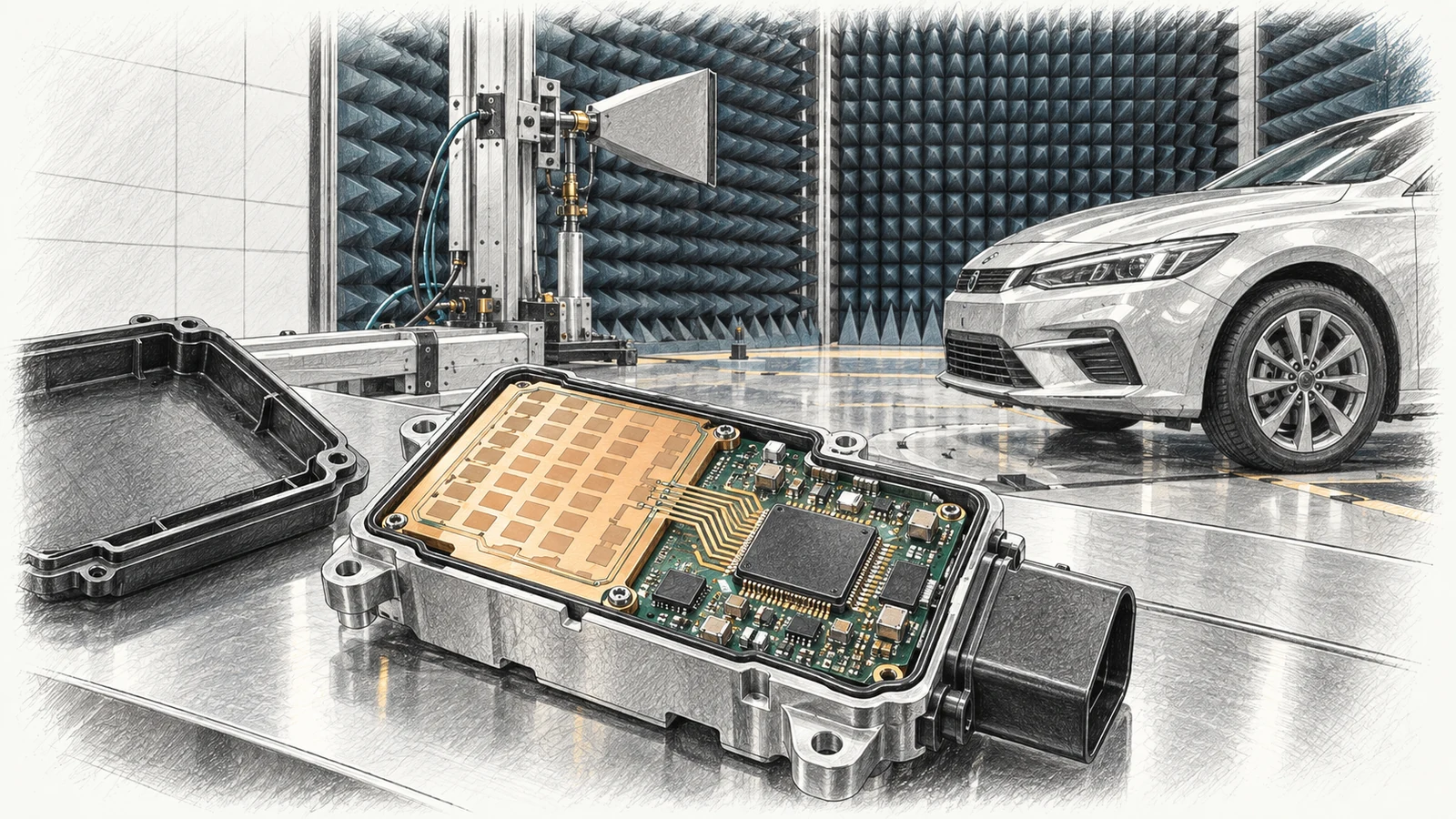
Calterah's new STAR Market application pairs rapid radar-chip growth with losses and uneven cash generation
Calterah entered the IPO pipeline with revenue that more than doubled in 2025, but remained loss-making. Its application arrives alongside the CSRC's annual accounting review, which explains why sales growth must be read with acceptance terms, expenditure recognition and asset values.
At Dongxu Optoelectronic, final regulatory decisions and later filings exposed the gap between reported financial strength and cash the listed company could actually use.
Final decisions connect false financial reporting, related-party fund occupation, securities issuance and gatekeeper failures, while the company’s earlier delisting followed a separate trading-based route.
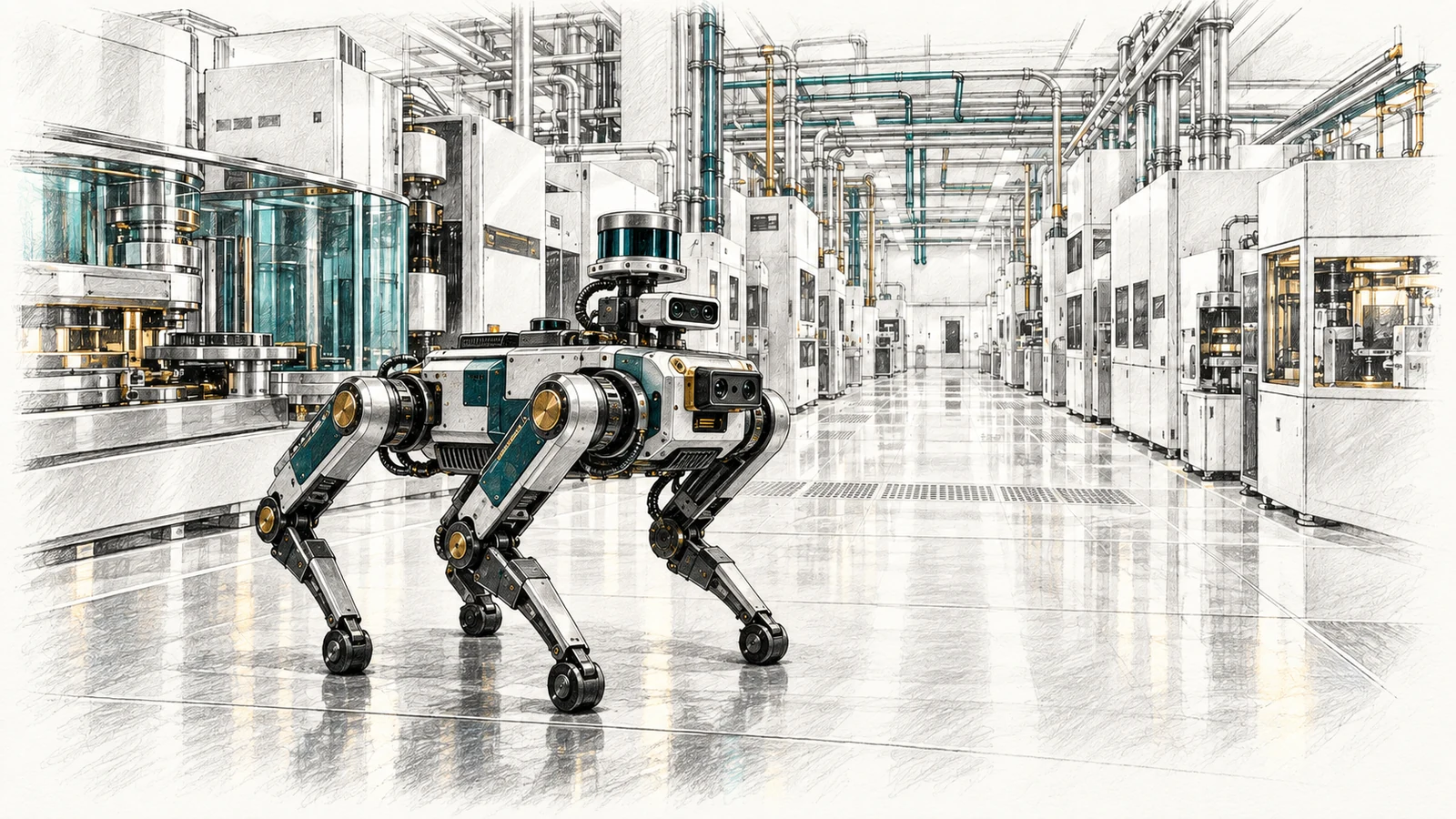
Deep Robotics' inquiry response connects fast sales growth with margins, customer demand and the cost of its next phase
Deep Robotics more than tripled revenue in 2025 and reported a higher gross margin. Its proposed CNY2.5 billion fundraising plan is a much larger bet on what comes next. The inquiry response helps readers distinguish commercial progress from the assumptions required to finance expansion.
The occupied funds have been recovered. Investors still need to distinguish that cash inflow from operating performance and examine how the controls that failed have changed.
The company reported full recovery of occupied funds and stronger operating results. Repayment records, cash-flow classification, and tests of revised payment controls answer different parts of the recovery question.
Operating cash flow turned positive as revenue collapsed. Project collections, overdue debt, and unresolved audit evidence determine how much that improvement can tell investors.
Positive operating cash flow sits beside collapsing revenue, a large loss, negative equity, overdue debt, a disclaimer audit opinion and adverse internal-control findings.
A new governance opinion and investment-banking measures put the work behind formal approvals under scrutiny
Lieqi's revenue and profit grew while operating cash flow weakened sharply. Its IPO supplies a concrete setting for the week's governance debate: who challenges a business forecast, how financing needs are explained, and whether an intermediary's controls work beyond the approval form.
New ABS guidance tests the underlying cash flow; an insider-trading interpretation moves attention to the start of a deal
A receivable can look sound on paper and still depend on circular funding. Shanghai's revised ABS guidance addresses that problem, while a new judicial interpretation explains why inside information can exist before a board votes. IPO reviews of a robotics developer and a turbocharger manufacturer bring the discussion back to profitability and exchange-rate exposure.
Two prior penalty notices raise different questions about IPO-period accounts: asset values and profit at Qingyue Technology, and evidence of completed work at Yuandao Communication.
Two CSRC prior-notice cases show why IPO-period financial information, post-listing disclosure, procedural status, and major illegal forced-delisting risk must be read carefully and separately.
The restructuring restored positive equity. A proposed renewable-energy acquisition now puts cash funding, leverage, and future earnings under scrutiny.
Positive equity returned after restructuring, but losses continued. The proposed renewable-energy purchase would add leverage and goodwill, making its funding and expected cash generation the next test.
Revenue was restated and occupied funds were repaid. The next test is whether later filings explain the company's losses, cash generation, and continuing reliance on related-party finance.
After correcting historical revenue and repaying occupied funds, Zhongtai continued to report losses alongside positive operating cash flow. Related-party finance, guarantees, and asset valuations help explain what changed and what remains exposed.
Debt settlements have changed reported earnings, but operating cash remains under pressure and the recovery of large contract assets depends on unresolved restructuring assumptions.
Debt settlements have improved reported results in some periods without restoring operating cash generation. Large contract assets, guarantees, and the unfinished restructuring leave the timing of recovery open.