Weekly Brief / Issue 06
China Capital Markets Weekly: Property Financing Moves to the Project Level
A property-financing opinion sets out project-based routes; Huatai's IPO response examines how chip demand turns into sales and collections
5 min read

The CSRC's property-financing opinion covers several ways to fund real assets, without reopening every route for every developer. Huatai Electronics' first-round response supplies a separate test of financing needs: customer qualification, orders, credit terms and production spending must tell a consistent story.
Contents
Financing a property project is not the same as reopening an IPO route
The CSRC published its property-financing opinion on August 28. The text, signed on December 27, 2025, describes routes including refinancing, acquisitions, bonds, commercial mortgage-backed securities, asset-backed securities, eligible REITs and a private investment-fund pilot.
For investors, the useful question is which route finances which asset and on what conditions. The opinion is not a blanket statement that every developer can raise equity or that property IPO restrictions have disappeared. It sits alongside existing requirements governing projects, proceeds and investor protection.
Huatai Electronics' IPO response, also published on August 28, brings that financing question into a different industry. Its commercial story depends on chip customers adopting products, placing orders and paying on terms that support production and research. In both cases, a financing label needs to be connected to the cash it is intended to support.
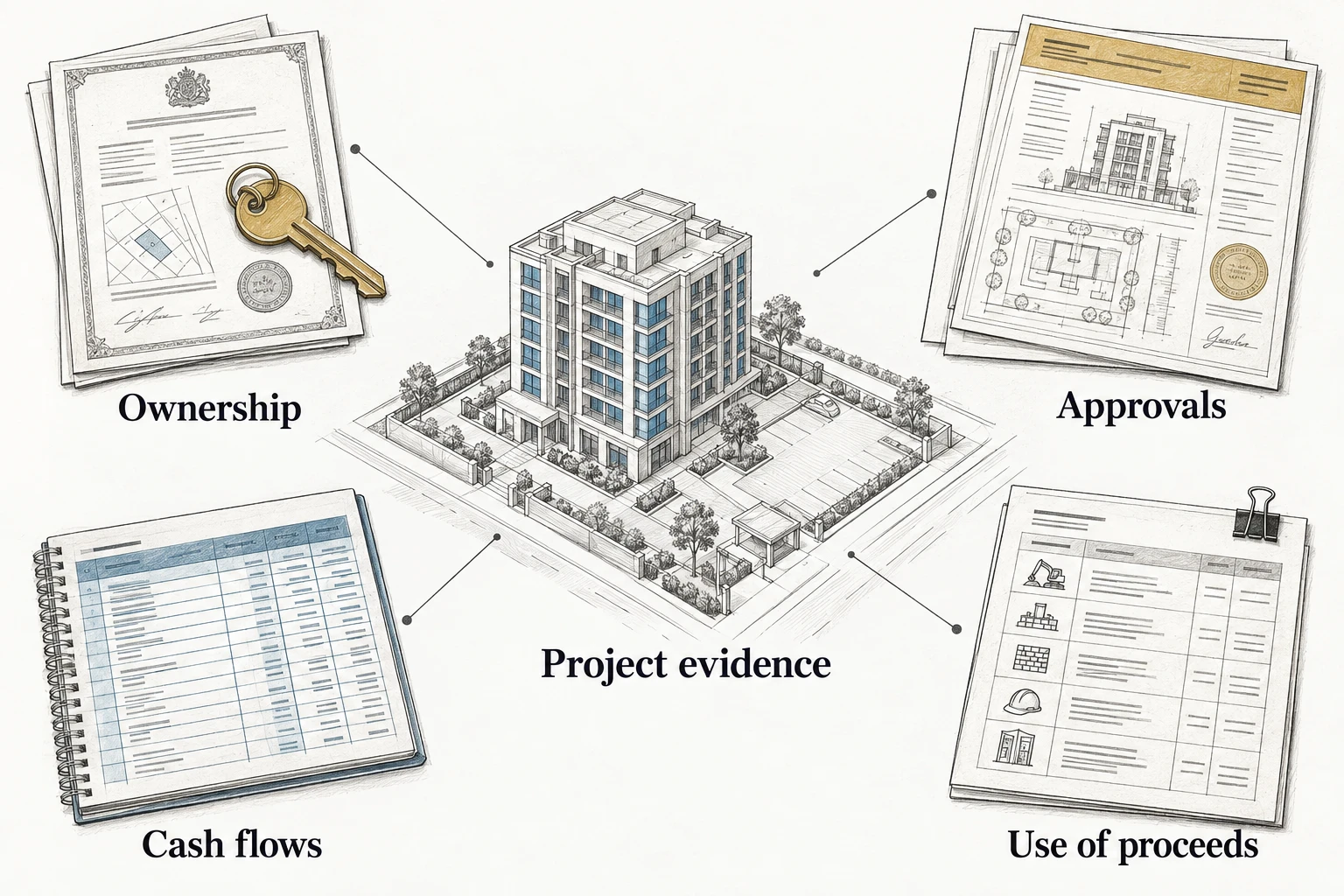
The property measures work through particular assets and structures
Refinancing by a listed company, a bond issue, a securitization and a REIT do different jobs. Equity absorbs business risk at company level. A bond creates a payment obligation. A securitization relies on defined assets or cash flows. A REIT provides exposure to an operating-asset structure with its own distribution and disclosure arrangements.
Those differences affect what readers should look for in an application. Is the project compliant? How will the proceeds be used? What income supports debt service or distributions? Which obligations remain with the sponsor, and which sit inside the financing vehicle? A policy route does not answer these questions for an individual project.
The opinion's significance is its range of tools, rather than a promise that a particular borrower will obtain funding. Project quality and the structure of repayment remain material. A transaction tied to an operating property also needs to be distinguished from a transaction whose cash flow depends on future development or sale.
Huatai's customers are part of its financial model
Huatai Electronics' first-round response concerns radio-frequency power products, including different semiconductor technology routes and product forms. Its customer section asks about cooperation histories, order acquisition, sales volumes and prices, changes among major customers, and the progress of new products through customer qualification.
The distinction between qualification and revenue is central. A product can be undergoing tests at an important customer without having a recurring order. A framework agreement can establish trading terms without fixing how much the customer will buy. A prospective sales forecast therefore needs to identify the current stage of each relationship.
The exchange also asks about credit policies and receivable turnover, including whether settlement arrangements or credit periods changed to support sales. Longer terms can be commercially reasonable, particularly for a new customer or product. They can also push cash collection further beyond revenue recognition. The response needs to explain the commercial reason and the resulting balance-sheet effect.
Huatai's explanation links customer changes to project progress and downstream demand. That is a testable explanation: order histories, shipment volumes, prices and collection dates should fit it. Where a counterparty is both customer and supplier, the purchase and sale arrangements deserve separate attention so that gross activity is not mistaken for an independent source of demand.
For readers new to semiconductor filings, the operating sequence is useful: a product is developed, qualified, ordered, manufactured, delivered and paid for. Research spending and inventory can come well before the last step. A business with promising technology can still need substantial financing during that interval.
The week's IPO milestones involve different decisions
Huatai's reply adds information to an existing STAR Market application; it is not a new acceptance. Suxun New Materials passed a Beijing exchange committee review, and the registration result for Jiangsu Yute Optoelectronics was published. Tongli Technology's registration process was terminated, with its project page updated on August 29.
Termination of registration should not be rewritten as a committee rejection or an allegation of wrongdoing. It describes the end of a specific procedural stage. The underlying formal decision is what establishes why the process ended.
Shanghai's August 24–28 market bulletin reported 41 corporate-bond applications with approximately CNY90.862 billion in proposed issuance. These were debt applications, not newly accepted equity IPOs. They show financing activity continuing outside the equity pipeline, but say nothing by themselves about the quality of a new equity applicant.
Disclosure supervision continues after capital is raised
For August 24–28, Shanghai reported twelve supervisory work letters and four requests for supplementary or corrected company announcements. It also reported 85 abnormal-trading incidents subject to self-regulatory measures, 38 checks concerning major company matters and two suspected-violation leads referred to the CSRC.
The figures describe the Shanghai exchange's own period and types of action. A request for a corrected announcement is not a final administrative penalty, and a referred lead is not a completed finding. The practical issue for a listed company is whether its disclosure process catches changes before investors are left with outdated information.
For financing advisers, the property opinion and Huatai's response point to two concrete tasks. Identify the actual eligibility conditions for the instrument being used. Then show how the proposed funding matches an asset, order or operating need. A statement that the policy is supportive, or that an industry is growing, cannot do either job.
Sources
- CSRC property-financing opinion
- Huatai Electronics first-round response, August 28, especially customer and receivable questions
- Suxun New Materials project filings
- Tongli Technology project filings
- Shanghai market and supervision bulletin, August 24–28, pp.2–3
- Beijing exchange project updates
Disclaimer
This article examines public records relating to the reporting period. It is for research and educational purposes and is not investment, legal or accounting advice, or a recommendation concerning any security. Official findings are attributed to the relevant authority; analytical observations are not findings of misconduct. Public documents may subsequently be corrected or supplemented.
Continue reading
View all records
Weekly Brief · 28 September to 4 October 2026
China Capital Markets Weekly: A Medical Approval Is Not Yet a Revenue Stream
Neuracle's brain-computer interface filing separates clinical progress from commercial revenue as semiconductor replies test the assumptions behind growth
Disclosure EvidenceCash Flow QualityRegulatory Scope & Timing

Weekly Brief · 21 to 27 September 2026
China Capital Markets Weekly: Airline Growth Meets the Balance Sheet
Loong Airlines' reply brings fleet financing into view, while review decisions and Beijing measures put the week's milestones in context